
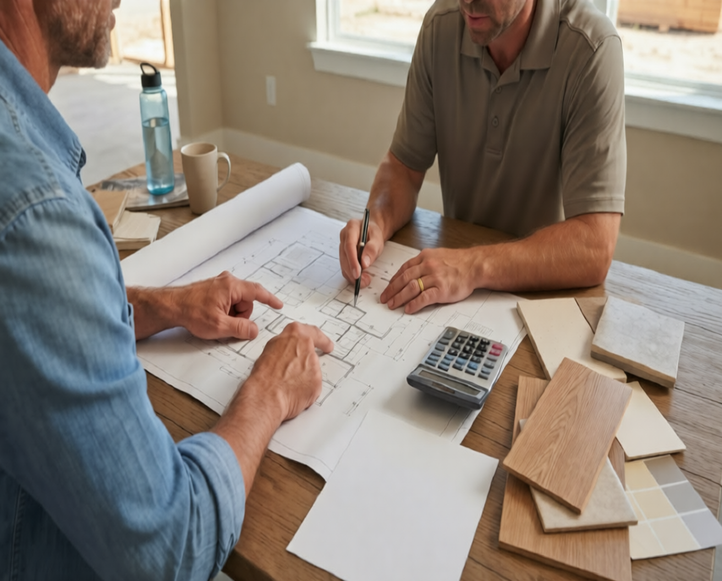
Ask any of the home builders in Tallahassee, FL what derails a project, and the answer is rarely the design. It’s the budget. That’s not because homeowners are careless. A lot of the cost sits out of sight: site conditions, permits, material timing, and small decisions that stack up mid-build. Here’s what builders wish clients understood before the first estimate arrives, and how to set a plan that holds up.
Table of Contents
ToggleYour Budget Is Bigger Than the Construction Estimate
The total contract generally covers labor and materials, but it may not include every expense involved in making a home move-in ready. When planning a custom home build, account for additional costs such as:
- Permits and inspections
- Site preparation, including land clearing, grading, and drainage
- Utility connections and septic installation, where public sewer is unavailable
- Architectural design and engineering fees
- Landscaping, appliances, and window coverings
Permitting requirements can also vary depending on the property’s location. Projects within Tallahassee city limits follow the city’s residential building permit process, while properties in unincorporated Leon County may have different requirements related to septic systems, environmental considerations, and driveway access. These factors can affect both the project timeline and overall budget, so discuss the requirements for your specific lot with your builder before construction begins.
Why a Contingency Fund Isn’t Optional
Walls hide things. Older homes in particular can reveal outdated wiring, moisture damage, or framing problems once demolition starts. Many builders suggest holding back roughly 10 percent of the budget for new construction, and more for remodeling projects in older homes.
Think of it as a planned buffer, not a sign the estimate is wrong. If you don’t need it, it can become a better finish or a landscaping upgrade at the end.
How to Prioritize When the Numbers Don’t Match the Wish List
Setting priorities for affordable home improvements comes down to sorting every item into three groups:
- Protect first: Structure, roofing, moisture control, electrical, plumbing, and HVAC. These are expensive to fix later.
- Invest where it pays back: Insulation, windows, and layout choices that affect daily use and energy bills.
- Upgrade later: Cabinet hardware, light fixtures, built-ins, and many finishes. These can be swapped out years from now without opening a wall.
Here’s how that plays out. If you can only afford one major upgrade right now, a stronger roof or window package often protects the house longer than a premium countertop. The countertop can always come later.
Where Costs Quietly Grow
Most overruns trace back to a handful of causes:
- Change orders: Moving a wall or switching materials after work begins costs more than deciding up front.
- Allowances: Placeholder amounts for fixtures, tile, or appliances often run low once you shop in person.
- Building code requirements: The Florida Building Code sets statewide minimums for wind resistance and moisture protection, which can affect material and labor costs.
- Weather and humidity: Florida’s climate and storm exposure affect scheduling and material choices.
- Supply timing: Lead times on windows, doors, and cabinets can shift the schedule and, sometimes, the price.
Ask how each of these is handled in writing before you sign.
How to Get a Realistic Number From Home Builders
A useful estimate is itemized, whether you’re planning a new build or a kitchen remodel. Ask these questions when you compare bids:
- What’s included, and what’s excluded?
- Which items are allowances, and what are the amounts?
- How are change orders priced and approved?
- What contingency do you recommend for this project?
Final Thoughts
A good budget isn’t the lowest number. It’s the one that accounts for the whole project and leaves room for surprises. Set your priorities early, ask for an itemized bid, and keep a contingency in reserve.
Planning a new build or a home improvement project in Tallahassee? Talk with the team at Eberhardt Construction & Design about your goals and budget range. Call +1 850 566-6320 or request a free estimate to get a clear picture of what to expect before plans are final.